
In India, Tinospora cordifolia, commonly known as Guduchi or Giloy, has been respected for centuries as a powerful medicinal plant. From traditional household preparations to its refined use in homoeopathy, this plant represents a beautiful bridge between traditional health wisdom and individualized medical therapeutics.
Guduchi in the Indian Household
In many Indian homes, Guduchi is traditionally used as a daily health-supporting herb.
The stem is commonly boiled in water to prepare a decoction that families drink to maintain general health.
It is popularly used for:
Improving immunity
Managing recurrent fevers
Supporting recovery from infections
Promoting digestion and vitality
In traditional practice, Guduchi is valued as a “Rasayana” herb, meaning a rejuvenating substance that supports long-term health and resistance to disease. Many families keep the plant at home and use it during seasonal changes or viral outbreaks.
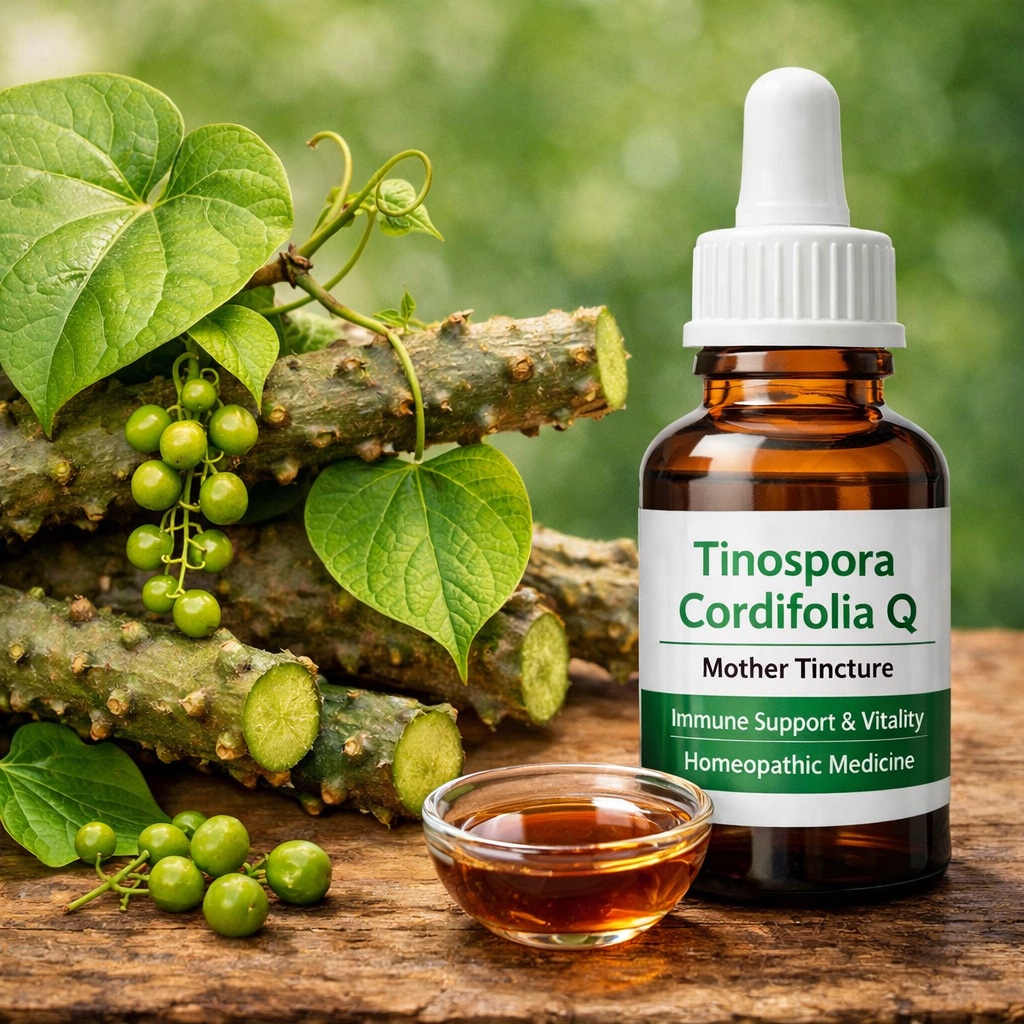
Homoeopathic Preparation and Perspective
In homoeopathy, the same plant is prepared as a mother tincture (Q) through a process of extraction and potentization according to pharmacopeial standards.
While the plant itself is already known for its health-supporting properties, homoeopathy uses it with a specific therapeutic intention based on symptom similarity and organ affinity.
The homoeopathic mother tincture of Tinospora cordifolia acts primarily on:
The immune system
The liver and metabolic processes
The respiratory system
The body’s defensive and adaptive mechanisms
It is often considered in conditions like Allergic Rhinitis, Bronchial Asthma, recurrent infections, and states of lowered immunity.
Similarity Between Household Use and Homoeopathic Use
Interestingly, the core concept remains similar in both traditions. Whether used traditionally or homoeopathically, Guduchi is primarily valued for its ability to:
- Strengthen the body’s natural defense mechanisms
- Improve resistance to infections
- Support recovery and vitality
- Help the body adapt to environmental stressors
- Thus, the fundamental recognition of Guduchi as an immune-supportive and restorative plant is common to both systems.
- What Homoeopathy Adds
- Homoeopathy adds an important therapeutic dimension to this plant. Instead of simply using it as a general tonic, the homoeopathic approach applies it according to specific indications and individual patient needs.
- Homoeopathic prescribing follows the principles described in the Organon of Medicine by Samuel Hahnemann, where medicines are selected based on the totality of symptoms and the body’s reaction patterns.
- Through this approach, Tinospora cordifolia can act not only as a supportive remedy but also as a regulating medicine for immune imbalance, allergic tendencies, and recurrent inflammatory states.
- Conclusion
- Tinospora cordifolia beautifully illustrates how a traditional household remedy can also serve as a scientifically prepared homoeopathic medicine. While its everyday use in Indian homes supports general immunity, homoeopathy refines its application by using it therapeutically and individually, helping the body restore balance and resilience.
- In this way, Guduchi stands as a symbol of continuity between traditional wisdom and modern homoeopathic practice, offering both preventive support and gentle therapeutic action.
In some cases, it is also used to support the body during chronic inflammatory conditions.
 Pure Care with Homeopathy