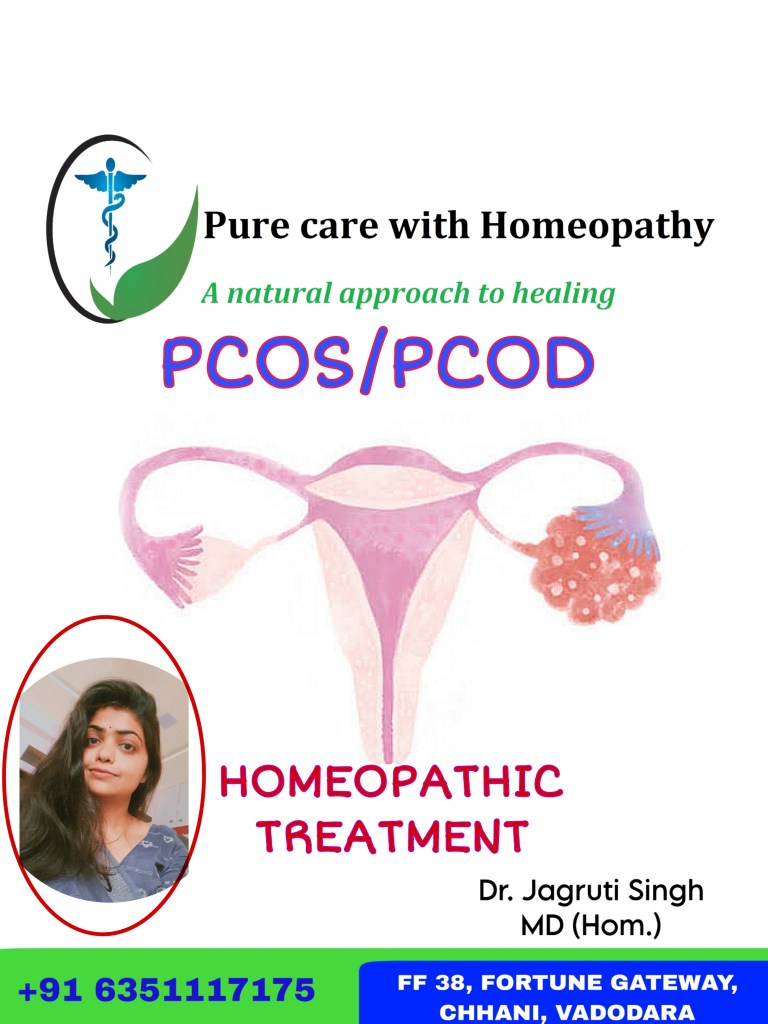
Polycystic Ovary Syndrome (PCOS) is one of the most common endocrine disorders affecting women of reproductive age. It is characterized by irregular or absent menses, hyperandrogenism, ovarian cystic changes, and metabolic disturbances. In many patients, the core disturbance lies in ovarian hormonal dysregulation and altered hypothalamic–pituitary–ovarian (HPO) axis signaling, which ultimately affects the normal menstrual rhythm.
From a homoeopathic perspective, menstrual irregularity in PCOS is not merely a local ovarian problem but represents a systemic disturbance of the vital force affecting the reproductive sphere. According to the principles described in the Organon of Medicine by Samuel Hahnemann, treatment aims to restore harmony in physiological functioning rather than only suppress symptoms.
One of the classical remedies used in menstrual irregularities is Senecio aureus, commonly known as Golden Ragwort. In homoeopathic practice, the mother tincture (Q) of Senecio aureus has traditionally been used when menstrual function is suppressed, delayed, or irregular, particularly when associated with functional ovarian disturbances.
Physiological Action in PCOS
Senecio aureus is believed to exert a regulatory influence on the female reproductive organs, particularly the uterus and ovaries.
Clinically, it has been observed to help stimulate menstrual activity when menses are delayed or absent, which is a common presentation in PCOS patients with oligomenorrhea or secondary amenorrhea.
The mother tincture is thought to act by:
- Supporting uterine tone and circulation
- Stimulating physiological menstrual flow when suppressed
- Improving ovarian responsiveness within the endocrine axis
- Helping re-establish the natural rhythm of the menstrual cycle
Unlike hormonal suppression used in conventional therapy, the homoeopathic approach seeks to encourage the body’s inherent regulatory mechanisms. When indicated, Senecio aureus may assist the organism in gradually restoring the normal cyclical activity of the reproductive system.
Clinical Indications in PCOS
In clinical homoeopathic practice, Senecio aureus may be considered when PCOS patients present with:
Integrative Perspective
PCOS management benefits from a holistic approach, combining lifestyle regulation, dietary balance, stress management, and individualized homoeopathic treatment. Remedies like Senecio aureus are not intended to replace constitutional prescribing but can serve as supportive therapeutic tools when symptom similarity is present.
By addressing menstrual irregularity through physiological stimulation rather than suppression, homoeopathy aligns with the concept of restoring equilibrium within the organism, a core principle emphasized in classical homoeopathic philosophy.
to consult
contact us on 63511 17175
address : chhani, vadodara
DR. JAGRUTI SINGH
 Pure Care with Homeopathy