Endometriosis is a chronic gynecological condition in which tissue similar to the endometrial lining of the uterus grows outside the uterine cavity. This misplaced tissue continues to respond to hormonal changes during the menstrual cycle, leading to inflammation, pain, and sometimes infertility.
Affecting a significant number of women during their reproductive years, endometriosis is not merely a structural disorder but a complex condition involving hormonal, immunological, and inflammatory mechanisms.
Types of Endometriosis
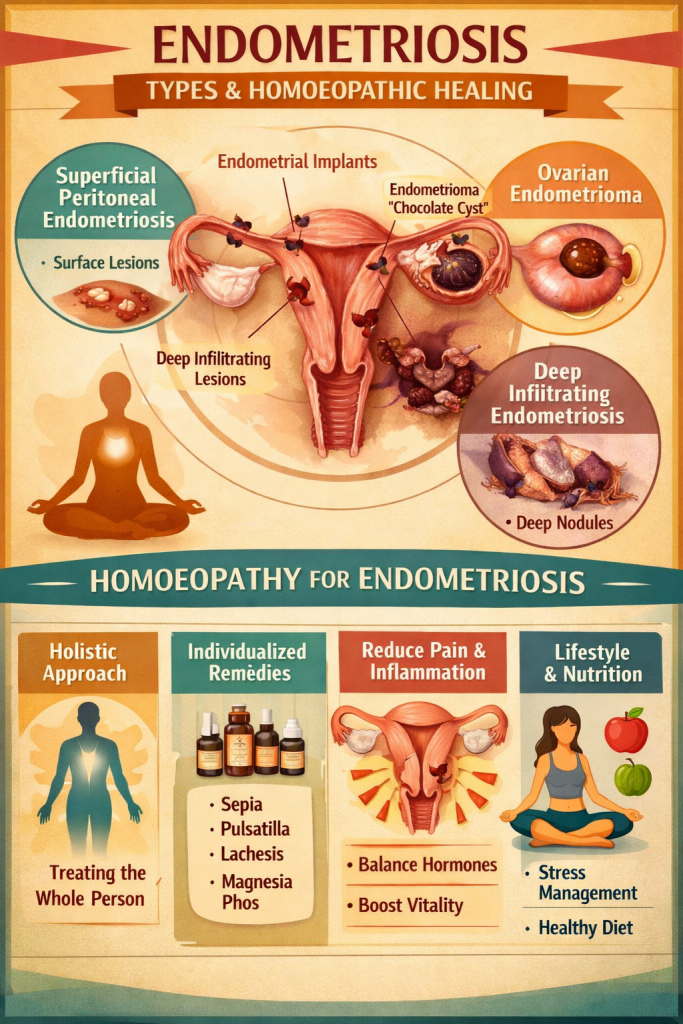
Clinically and pathologically, endometriosis is broadly classified into three main types:
- Superficial Peritoneal Endometriosis
This is the most common form, where small lesions appear on the peritoneum (the lining of the pelvic cavity). These implants may be red, black, or white and can cause pelvic pain, especially during menstruation. - Ovarian Endometriosis (Endometrioma)
In this type, cysts form on the ovaries and are commonly known as “chocolate cysts” because they contain thick, old blood. Ovarian endometriomas may affect ovarian function and are often associated with infertility. - Deep Infiltrating Endometriosis (DIE)
This is a more severe form where endometrial-like tissue penetrates deeper into pelvic organs such as the uterosacral ligaments, rectovaginal septum, bladder, or intestines. Women with DIE often experience severe dysmenorrhea, painful intercourse, and chronic pelvic pain.
Pathophysiology and Clinical Presentation
From a pathological perspective, endometriotic lesions produce inflammatory mediators and prostaglandins, which contribute to pain and adhesions. Common symptoms include severe menstrual cramps, pelvic pain, heavy menstrual bleeding, pain during intercourse, and difficulty conceiving. However, the severity of symptoms does not always correlate with the extent of disease.
Modern medical management often includes hormonal therapy, analgesics, or surgical intervention. While these methods may provide symptomatic relief, recurrence is not uncommon. - Homoeopathic Perspective and Integrated Healing
Homoeopathy approaches endometriosis from a holistic and individualized standpoint. According to the principles laid down in Samuel Hahnemann’s Organon of Medicine, disease is viewed as a dynamic disturbance of the vital force rather than merely a structural pathology. Therefore, treatment is directed toward restoring balance within the organism rather than only suppressing local lesions.
In homoeopathic practice, the selection of the remedy is based on the totality of symptoms—including physical complaints, emotional disposition, menstrual characteristics, and constitutional tendencies. This individualized approach allows the physician to address not only the pathological manifestations but also the patient’s overall susceptibility.
From the standpoint of MD (Homoeopathy) in Practice of Medicine, understanding the pathology of endometriosis is crucial for proper case management. Diagnostic tools such as ultrasound or laparoscopy help confirm the condition, while homoeopathic treatment works to reduce inflammation, regulate hormonal imbalance, and improve the patient’s general vitality.
Commonly indicated remedies in clinical practice may include Sepia, Lachesis, Pulsatilla, Belladonna, or Magnesia phosphorica, depending on the patient’s symptom picture. For instance, Sepia is often considered in women with pelvic congestion, bearing-down sensations, and irritability, while Magnesia phosphorica may help when pain is spasmodic and relieved by warmth.
The Integrated Approach
An integrated approach combining homoeopathic constitutional treatment with lifestyle regulation, stress management, and nutritional support can be beneficial. Homoeopathy aims to reduce the frequency and intensity of pain, regulate menstrual cycles, and improve reproductive health while supporting the body’s inherent healing capacity.
In conclusion, endometriosis is a multifactorial condition that requires careful evaluation and individualized management. Homoeopathy, guided by the principles of the Organon and supported by modern pathological understanding, offers a gentle yet profound therapeutic approach aimed at restoring harmony in the patient as a whole.
 Pure Care with Homeopathy