Introduction
Self-Care Month, observed annually in July, serves as an important reminder of the value of prioritizing our health and well-being. In today’s fast-paced world, self-care goes beyond momentary relaxation—it involves consistent, conscious efforts to support the body’s natural resilience. Among the various approaches to self-care, homeopathy offers a time-tested, holistic system that emphasizes individualized care and immune system support.
The Essence of Self-Care
At its core, self-care involves taking proactive and preventive measures to maintain one’s physical, emotional, and mental health. It requires tuning into the body’s signals and nurturing it through balanced nutrition, stress management, rest, movement, and—importantly—integrative health modalities. Homeopathy complements this philosophy by not merely treating illness, but by working to restore harmony within the body and enhance its innate healing ability.
Homeopathy: A Holistic Approach to Health
Homeopathy is a medical system founded over two centuries ago by German physician Dr. Samuel Hahnemann. Based on the principle of “like cures like,” it employs highly diluted natural substances to stimulate the body’s self-healing mechanisms. Homeopathic remedies are selected based on an individual’s complete symptom picture—physical, emotional, and psychological—making the treatment deeply personalized.
The Role of Homeopathy in Immune Support
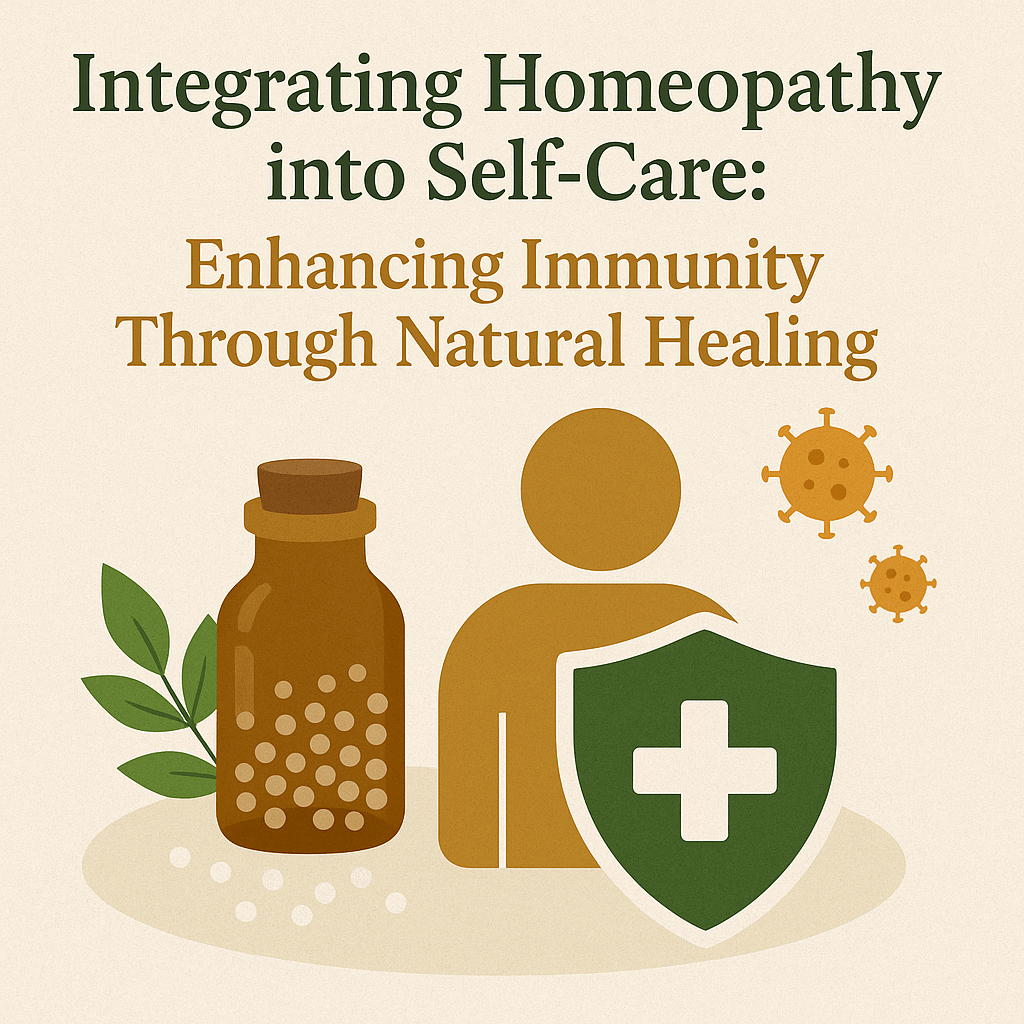
The immune system is the cornerstone of health. A strong immune response not only helps ward off infections but also prevents the recurrence of chronic illnesses. Homeopathy plays a supportive role in enhancing immune function by:
• Addressing Root Causes: Homeopathy aims to identify and treat the underlying imbalances that may compromise immunity, rather than simply suppressing symptoms.
• Strengthening Constitutional Health: By taking into account an individual’s constitutional type, remedies are tailored to build long-term resistance to illness.
• Safe, Non-Toxic Interventions: Free from synthetic chemicals and adverse side effects, homeopathic remedies are safe for all age groups, including children, pregnant women, and the elderly.
• Reducing Frequency of Illness: Many patients report fewer occurrences of colds, flu, and other infections with regular homeopathic care, suggesting a strengthened immune defense.
Commonly Used Homeopathic Remedies for Immune Support
While remedy selection should always be guided by a qualified homeopath, the following are some commonly indicated remedies that may support immune function:
• Echinacea – Traditionally used to enhance the body’s natural defenses during seasonal changes or increased susceptibility to infection.
• Arsenicum Album – Often prescribed for individuals with weak immunity, especially those prone to digestive upsets and flu-like symptoms.
• Sulphur – Used for individuals with a history of recurrent infections and lowered vitality.
• Thuja Occidentalis – Frequently recommended for post-vaccination care or individuals with compromised immune response.
Encouraging Self-Care Through Homeopathy
By reinforcing the body’s self-regulatory mechanisms, homeopathy aligns seamlessly with the principles of preventive health and self-care. It fosters greater body awareness, emotional stability, and overall vitality, encouraging individuals to take an active role in their wellness journey.
Conclusion
Self-Care Month offers an ideal opportunity to reflect on our health habits and explore integrative approaches that support lifelong wellness. Homeopathy, with its individualized, non-invasive methodology, stands as a valuable ally in this process—particularly in promoting immune resilience and overall health. When guided by a trained practitioner, it can become an essential component of a thoughtful, proactive self-care regimen.
Dr. JAGRUTI SINGH
MD (Hom.)
 Pure Care with Homeopathy